









That aching pressure at the back of your jaw can stop you mid-bite. It might come on gradually or arrive suddenly, and it does not always stay in one place. Pain from wisdom teeth can radiate to the ear, the jaw, nearby teeth, and even the throat, which makes it easy to confuse with something else entirely. Understanding where it is coming from, and why it spreads, helps you decide what to do next.
Wisdom teeth are the last adult teeth to develop, usually emerging between the ages of 17 and 25. For some people, they arrive without issue. For others, limited space, poor angle, or partial eruption creates a range of problems that go well beyond a sore gum, sometimes requiring wisdom tooth extraction and care.
Quick Overview
- Wisdom tooth pain area refers to the region of discomfort associated with wisdom teeth erupting or becoming impacted at the back of the mouth
- Pain may affect the gum, jaw, surrounding teeth, or radiate toward the ear; in some cases involving only temporary growing pains, in others signalling infection or impaction
- What the pain feels like and where it appears can indicate which structure is involved, but individual presentations vary considerably
- Several factors affect whether monitoring is sufficient or whether professional assessment is needed, including how the tooth is positioned and whether infection is present
- A dental examination is the only reliable way to assess what is happening beneath the gum
Keep reading to understand the different types of wisdom tooth pain, what they may indicate, and what a dentist may recommend based on your situation.
Where Does Wisdom Tooth Pain Come From?
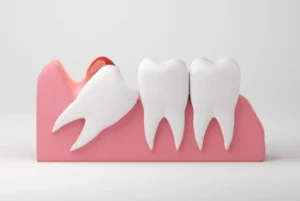 Wisdom teeth, also called third molars, sit at the very back of the mouth: up to four in total, one in each corner of the upper and lower jaw. When they begin pushing through the gum, the surrounding tissue responds with pressure, tenderness, and sometimes inflammation. This is the most common source of wisdom tooth pain.
The pain is not always isolated to where the tooth is erupting. Nerve pathways in the jaw mean that pressure or infection in one area can create sensation in another. This is why wisdom tooth pain often includes jaw stiffness, earache, or a sore throat, even when the tooth itself appears to be the root cause.
For many people, the discomfort is temporary and eases once the tooth breaks through. For others, the pain signals something that needs clinical attention. Knowing the difference depends on what the pain feels like, where it appears, and whether it is getting better or worse over time. Wisdom teeth cause several dental problems, from infection to impaction, depending on how they erupt.
What Are the Different Types of Wisdom Tooth Pain?
Not all wisdom tooth pain feels the same. The type of sensation can give a sense of what is happening, though only a dental examination can confirm it.
Pressure and dull aching: This is common during eruption. As the tooth pushes upward through bone and gum tissue, the surrounding structures feel the force. The ache tends to come and go and may track along the jaw or up toward the ear.
Sharp or throbbing pain: A more intense, persistent, or throbbing sensation often points to inflammation or infection in the soft tissue surrounding a partially erupted tooth. This condition, called pericoronitis, happens when a flap of gum sits over the erupting tooth and traps food and bacteria underneath.
Pain when biting or opening the mouth: Swelling and inflammation in the area can limit jaw movement and cause discomfort when chewing. If this develops alongside swelling in the cheek or jaw, prompt dental attention is important.
Pain in nearby teeth: When a wisdom tooth pushes against the second molar beside it, that adjacent tooth may ache or become sensitive. The pressure can be subtle but persistent, and is sometimes mistaken for decay in the nearby tooth.
Referred pain to the ear or throat: Because of the shared nerve supply in the jaw, wisdom tooth pain can travel beyond the tooth itself. An earache or sore throat with no obvious cause may have a dental origin worth investigating.
What Makes Wisdom Tooth Pain Worse?
The most common driver of problematic wisdom tooth pain is impaction: when the tooth cannot erupt properly because there is not enough room or because it is growing at an angle.
Human jaws have become smaller over time, while the number of teeth has stayed the same. This means wisdom teeth often arrive in a mouth that has run out of space. The result is a tooth that may push sideways into the second molar, partially erupt and get stuck beneath the gumline, or angle toward the back of the mouth in a way that makes cleaning impossible.
Partial eruption creates specific problems. When a tooth sits halfway through the gum, a pocket forms between the gum tissue and the tooth surface. Bacteria and food debris accumulate in this pocket. The surrounding gum becomes inflamed, infected, and painful, a cycle that tends to repeat unless the underlying issue is addressed. A dentist may recommend removal for repeated infection or impaction that cannot be managed any other way.
Tooth decay is another concern. Wisdom teeth at the back of the mouth are difficult to clean with a standard toothbrush. If they are partially erupted or tilted toward another tooth, the surface between them becomes a site where plaque and decay develop. This can cause pain not only in the wisdom tooth but in the adjacent second molar as well.
What Are the Warning Signs That Need Prompt Attention?
Some wisdom tooth discomfort resolves on its own as the tooth erupts. Other presentations indicate that professional assessment should not wait.
Symptoms that warrant a prompt dental visit include: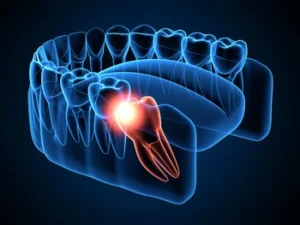
- Swelling in the cheek, jaw, or under the chin that does not reduce after a day or two
- Difficulty opening the mouth fully
- Pain that is getting worse rather than improving
- A bad taste or smell from the back of the mouth
- Fever or a general feeling of being unwell alongside dental pain
- Visible pus or discharge near the wisdom tooth
These may indicate a dental infection that requires treatment. Infection in the jaw area can spread if left unaddressed, so early assessment is important. The Australian Dental Association’s guidance on wisdom teeth and oral health reinforces the importance of not waiting until pain becomes severe.
What Temporary Measures May Help?
While waiting for a dental appointment, some approaches may reduce discomfort temporarily. These are not substitutes for professional treatment and will not resolve an underlying infection or impaction.
- Saltwater rinse: Dissolving half a teaspoon of salt in a cup of warm water and gently rinsing around the affected area may help reduce inflammation and keep the site cleaner.
- Over-the-counter pain relief: Paracetamol or ibuprofen, taken as directed on the packaging, can help manage mild to moderate pain. Ibuprofen has mild anti-inflammatory properties that may be useful where the gum is swollen.
- Soft foods: Avoiding hard, crunchy, or chewy foods reduces the pressure placed on the wisdom tooth area during eating.
- Cold compress: A wrapped ice pack held against the outside of the cheek for 10 to 15 minutes may help reduce swelling and provide some temporary relief.
These measures are short-term only. If pain is persistent, worsening, or accompanied by swelling or fever, do not delay a dental assessment.
What Might a Dentist Recommend?
What a dentist recommends depends entirely on what is found during examination. Individual circumstances vary, and there is no single approach that suits every presentation of wisdom tooth pain.
A dentist will typically take X-rays to assess how the wisdom teeth are positioned, how their roots are formed, and how close they are to surrounding structures. This gives a clearer picture than examination alone.
From there, options may include:
Monitoring: If the wisdom teeth are erupting without significant impaction and the pain appears to be temporary growing pressure, a dentist may recommend observing them over time rather than acting immediately.
Cleaning and treatment of pericoronitis: If the gum around a partially erupted tooth is infected, a dentist may clean the area, prescribe a mouthwash, or in some cases prescribe antibiotics to manage the infection before a longer-term decision is made.
Extraction: Where a wisdom tooth is impacted, repeatedly causing infection, damaging adjacent teeth, or contributing to decay that cannot be managed conservatively, extraction is often the recommended option.
Not every wisdom tooth needs to be removed. Some erupt without causing ongoing issues and can be maintained with careful cleaning. The key is having an accurate picture of their position and condition.
A Considered Approach to Wisdom Tooth Pain
Wisdom tooth pain that comes and goes during eruption can be unsettling, but not all of it signals a serious problem. What matters is understanding the difference between temporary discomfort and a developing issue that needs attention.
If the pain is mild and settling, basic measures and a scheduled dental appointment are reasonable. If pain is escalating, spreading, or accompanied by swelling or fever, seeking assessment sooner is the right call. Individual outcomes vary depending on the position of the teeth, the health of surrounding gum and bone, and how promptly the situation is assessed.
If you are experiencing wisdom tooth pain, the team at Complete Dental Elanora and Coorparoo welcomes you to book an assessment.
- Contact Elanora Clinic: 07 5235 8199
- Contact Coorparoo Clinic: 07 3801 6503
Note: Any surgical or invasive procedure carries risks. Before proceeding, you should seek a second opinion from an appropriately qualified health practitioner.
Frequently Asked Questions
Why does wisdom tooth pain spread to my ear or jaw?
Wisdom teeth share nerve pathways with other structures in the lower face, including the ear and jaw. When the gum or surrounding tissue becomes inflamed or infected, the nerve can carry that signal to areas beyond the tooth itself. This is called referred pain and is a common feature of wisdom tooth presentations. A dental examination can confirm whether the wisdom tooth is the source.
How long does wisdom tooth pain usually last?
If the pain is caused by the tooth erupting through the gum, it may ease within a few days to a couple of weeks as the tooth settles. If the pain is caused by impaction, infection, or ongoing pericoronitis, it is unlikely to resolve on its own and tends to recur or worsen without treatment. Individual experiences vary considerably.
References
Better Health Channel. (2022). ‘Wisdom Teeth’. Better Health Channel, 3 June. Melbourne, VIC: Department of Health, State Government of Victoria. https://www.betterhealth.vic.gov.au/health/conditionsandtreatments/wisdom-teeth
Healthdirect Australia. (2026). ‘Removing Wisdom Teeth’. Healthdirect Australia, January. Canberra, ACT: Australian Government Department of Health. https://www.healthdirect.gov.au/surgery/removing-wisdom-teeth
Australian Dental Association. (2026). ‘Back to the Dentist! Dental Health Week 2026 Theme Unveiled’. Australian Dental Association, 1 July. Sydney, NSW: Australian Dental Association. https://ada.org.au/back-to-the-dentist-dental-health-week-2026-theme-unveiled
Teeth.org.au. (n.d.). ‘Wisdom Teeth’. Teeth.org.au. Sydney, NSW: Australian Dental Association. https://www.teeth.org.au/wisdom-teeth