








If your dental implant feels loose, it can be unsettling. The good news is that movement does not always mean the entire implant has failed. In many cases, what feels like a loose dental implant is actually a loose crown or abutment screw, a far more manageable situation than it might first appear. Understanding what has moved, and why, determines what happens next.
At Complete Dental, our dentists at Elanora and Coorparoo take the time to assess each individual’s situation before recommending any course of action, because not every presentation of dental implant looseness has the same cause or the same solution.
Quick Overview
- A loose dental implant refers to any perceived movement in an implant or its attached components, including the crown, abutment, or implant post itself
- Looseness can occur soon after surgery or years later, and in some cases, involves only the crown rather than the implant structure
- Identifying which component is loose guides the treatment path: crown or abutment issues are often managed without major surgery, while implant post mobility requires a more thorough assessment
- Factors including gum health, bone density, teeth grinding, oral hygiene, and how promptly the issue is addressed all affect what treatment may be appropriate
- A dental examination and X-ray are needed to determine exactly what has moved and why; individual circumstances vary considerably
Keep reading to understand the causes, warning signs, and what a dentist at Complete Dental may recommend based on your situation.
What Does It Mean When a Dental Implant Feels Loose?
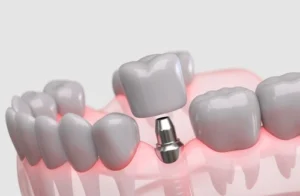
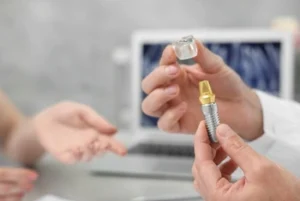 A dental implant has three main components: the titanium post (implant fixture) placed in the jawbone, the abutment that connects the post to the crown, and the crown itself, the visible prosthetic tooth. When movement is noticed, it is worth knowing that each component can be affected independently.
In many cases, what a patient experiences as a loose dental implant is actually the crown or the abutment screw that has loosened, rather than the implant post itself. Abutment screw loosening is among the most common mechanical complications in implant-supported restorations. This is relevant because a loose abutment is typically a mechanical issue that can often be resolved at a dental appointment without further surgical intervention. You can read more about how dental implants work on Healthdirect Australia.
When the implant post itself is mobile, the situation is more serious. This type of movement suggests the implant may not have integrated properly with the surrounding bone or that bone loss has occurred around the implant site. Both scenarios require prompt attention.
What Are the Symptoms of a Loose Dental Implant?
Recognising the early signs of looseness can influence how manageable the situation is. Symptoms can vary depending on which part of the implant structure is affected.
Signs that may indicate looseness in the crown or abutment:
- A slight rocking or ticking sensation when biting down
- The visible crown shifting slightly when pressed with a finger or tongue
- A gap appearing between the crown and the gum line that was not previously present
- The crown feeling higher or lower than the surrounding teeth
Signs that may indicate movement in the implant post itself:
- Visible movement of the entire implant when pressed
- Pain or tenderness around the implant site, particularly when chewing
- Swelling, redness, or bleeding in the surrounding gum tissue
- A persistent bad taste or unusual sensation near the implant
Any of these symptoms warrants a dental appointment without delay. Leaving a loose component unaddressed can allow gum tissue to grow into the gap, place additional stress on the implant post, and increase the risk of further complications.
Why Does a Dental Implant Crown or Abutment Loosen?
 The most common source of perceived looseness is mechanical: the small screw connecting the abutment to the implant post gradually loosens over time. Screw loosening has been reported to affect a meaningful proportion of implant-supported crowns within the first five years, with higher rates in patients who grind their teeth or have uneven bite pressure.
Several factors can contribute to this:
Teeth grinding (bruxism): Consistent clenching or grinding generates forces beyond what the implant system is designed to absorb. These forces can loosen the abutment screw over time and, in some cases, cause crown fractures or damage to the implant itself.
Bite alignment: When chewing forces are not distributed evenly across the dental arch, the implant bears a disproportionate load. Forces applied at an angle to the implant’s long axis are associated with a meaningful proportion of screw loosening cases.
Cement failure: For cement-retained crowns, the bond between the crown and abutment can weaken over time. The crown may remain in position but move under pressure.
Normal wear: All mechanical connections are subject to micro-movement over thousands of biting cycles. This is why regular dental check-ups are an important part of long-term implant maintenance.
What Causes the Implant Post Itself to Become Loose?
When the implant fixture itself is mobile, rather than just the crown or abutment, the underlying cause is typically biological rather than mechanical.
Peri-implantitis: This is an inflammatory condition affecting the gum and bone surrounding a dental implant, similar in many respects to periodontal disease affecting natural teeth. Understanding gum disease and its causes is relevant here, as the mechanisms are closely related. When left unmanaged, peri-implantitis leads to progressive bone loss around the implant, which compromises the stable foundation the fixture depends on.
Insufficient bone support: If the jawbone lacked adequate density or volume at the time of implant placement, or if bone loss has occurred since surgery, the implant may lack the support needed to remain stable. A bone graft may be required either before or after implant removal to rebuild the implant area before re-treatment can be considered.
Failed osseointegration: The process by which the titanium post fuses with the surrounding jawbone is called osseointegration. Factors including smoking, certain systemic health conditions, poor oral hygiene, and the quality of bone at the implant site can all affect how well this process proceeds. Early implant failures are often associated with patient-related factors such as smoking, diabetes, and the presence of periodontal disease in remaining natural teeth.
Trauma or excessive force: A significant impact to the jaw or face can disrupt an implant’s integration with the bone, as can prolonged exposure to excessive bite pressure.
What Does the Research Say About Dental Implant Loosening?
Understanding the clinical context of implant looseness can help set realistic expectations.
Dental implants have high long-term survival rates when properly placed and maintained. Long-term implant survival rates are well documented in dental literature, with current implant systems performing reliably over many years. This means implant complications, including looseness, occur in a minority of cases, but they do occur, and outcomes depend significantly on how early an issue is identified.
The distinction between crown or abutment looseness and implant post mobility is clinically important. Looseness at the restoration level is far more common and generally more straightforward to manage. Looseness at the post level is less common but more complex and is more closely associated with biological complications such as peri-implantitis or insufficient bone support. As peri-implantitis and implant gum health research shows, gum disease around an implant can be difficult to treat if not caught early.
How to Protect Your Dental Implant Over Time
There is no approach that removes all risk of implant complications, but certain habits are associated with better long-term outcomes. Individual circumstances vary, and the following is general guidance only.
- Attend regular dental check-ups: Routine examinations allow a dentist to detect early signs of looseness, gum inflammation, or bone changes before they become more complex issues
- Maintain good oral hygiene: Brushing twice daily, flossing or using interdental brushes, and cleaning around the implant site helps reduce the risk of peri-implantitis
- Avoid hard or sticky foods on the implant: Foods such as ice, hard lollies, or very sticky substances place high or unpredictable forces on the implant and crown
- Use a night guard if you grind your teeth: A custom-fitted night guard distributes forces more evenly and reduces the risk of screw loosening or crown damage
- Do not attempt self-repair: Applying over-the-counter adhesives or attempting to tighten components at home can cause damage that complicates professional treatment
A Considered Approach to a Loose Dental Implant
 If your implant feels loose, the most useful next step is a dental examination. What feels like a significant problem may turn out to be a loose crown or abutment screw, something that can often be addressed at a single appointment. What feels minor can, in some cases, indicate a more complex issue developing beneath the surface.
Individual outcomes vary, and the right treatment plan depends on your specific situation: which component is affected, the health of your gums and bone, and how promptly the issue is assessed. A dentist will not be able to determine the cause or appropriate course of action without a clinical examination and imaging.
If you notice any movement in your implant or the crown attached to it, we welcome you to get in touch with Complete Dental to arrange an assessment.
- Contact Elanora Clinic: 07 5235 8199
- Contact Coorparoo Clinic: 07 3801 6503
Frequently Asked Questions
What should I do if my dental implant feels loose?
Contact your dentist promptly. In the meantime, avoid placing unnecessary pressure on the implant: chew on the opposite side where possible and avoid hard or sticky foods near the affected area. Do not attempt to tighten the implant yourself or apply any adhesive products, as this can damage the components and complicate treatment.
Can a loose dental implant be fixed without removal?
In many cases, yes. If the looseness involves the crown or abutment screw rather than the implant post itself, a dentist can often tighten or replace the relevant component without surgery. Whether the implant post can be retained depends on the underlying cause, the amount of bone remaining around the implant, and the health of the surrounding gum tissue. Individual circumstances vary.
Note: Any surgical or invasive procedure carries risks. Before proceeding, you should seek a second opinion from an appropriately qualified health practitioner.
References
Healthdirect Australia. (n.d.). ‘Dental Implant’. Healthdirect Australia. Canberra, ACT: Australian Government Department of Health. https://www.healthdirect.gov.au/dental-implant
Teeth.org.au. (n.d.). ‘Dental Implants’. Teeth.org.au. Sydney, NSW: Australian Dental Association. https://www.teeth.org.au/dental-implants
Better Health Channel. (n.d.). ‘Gum Disease’. Better Health Channel. Melbourne, VIC: Department of Health, State Government of Victoria. https://www.betterhealth.vic.gov.au/health/conditionsandtreatments/gum-disease
Australian Dental Association. (2025). ‘Swedish Study Examines the Longevity of Single-Tooth Implant Treatments’. Australian Dental Association. Sydney, NSW: ADA. https://ada.org.au/swedish-study-examines-the-longevity-of-single-tooth-implant-treatments