








Many people dream of a brighter smile, but the thought of a whitening treatment can seem daunting if you have sensitive teeth. Sensitivity can make everyday activities like sipping coffee or brushing your teeth uncomfortable, so worrying about how your teeth might react to whitening products is natural. The good news is that you can achieve noticeably whiter teeth without enduring unnecessary discomfort when you take the right approach and follow your dentist’s guidance.
This detailed guide explains how teeth whitening works, why some people experience sensitivity, and how you can safely protect your enamel and gums while brightening your smile.
Why Do Your Teeth Feel Sensitive? Understanding the Cause
Tooth sensitivity happens when the tooth’s protective outer layer wears down, revealing the dentin beneath. This layer has tiny tubules that connect directly to the tooth’s nerve, making it more reactive to temperature, pressure, and whitening agents. Cold or hot foods, sweet treats, or a quick breath of cool air can trigger sensitive teeth.
Common causes of tooth sensitivity include enamel wear, gum problems, cracked or damaged teeth, and tooth decay. Brushing too hard or acidic foods can sometimes thin the enamel, exposing the nerves beneath. When sensitivity is present, a whitening treatment without preparation can increase tooth sensitivity.
How Does Teeth Whitening Actually Work?
 Teeth whitening treatments use active ingredients like hydrogen peroxide or carbamide peroxide to remove stains and brighten the natural shade of your teeth. These bleaching agents penetrate the enamel to remove stains caused by coffee, tea, wine, smoking, or age.
While effective, these whitening agents can temporarily dehydrate the teeth or irritate the nerves within, leading to increased sensitivity, particularly for people who already experience sensitivity issues.
There are two types of whitening treatments: professional teeth whitening and at-home teeth whitening. Each has its benefits and risks, depending on your teeth’s condition and your dentist’s recommendations.
Professional Teeth Whitening: Faster and More Controlled
Professional teeth whitening is carried out in a dental clinic under the supervision of a dental professional. It typically uses a whitening gel with a higher concentration of active ingredients compared to home whitening products. Because it is carefully monitored, professional whitening can deliver noticeable results in a shorter time.
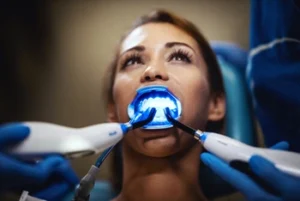
During an in-chair whitening session, your dentist protects your gums and soft tissues before applying the whitening gel. Sometimes, a special LED light activates the bleaching agents and speeds up the process. The entire procedure can take around 60 to 90 minutes, leaving you with a brighter smile after just one visit to our Coorparoo dental clinic for teeth whitening.
If you have sensitive teeth, your dentist may suggest using desensitising agents like potassium nitrate or fluoride to help reduce discomfort during and after treatment. Custom-made trays can also help apply whitening gels more precisely, avoiding contact with the gums and reducing gum sensitivity.
At Home Teeth Whitening: Convenience and Customisation
At-home whitening treatments can be a good alternative for those who prefer to whiten teeth gradually. These options include trays, whitening strips, or whitening toothpastes with lower concentrations of whitening agents.
Your dentist can create custom-made trays that fit snugly around your teeth, allowing you to apply the whitening gel evenly and precisely. This lowers the risk of irritation and helps manage sensitivity more effectively.
Many whitening products designed for sensitive teeth include ingredients like potassium nitrate and fluoride, which strengthen tooth enamel and soothe the nerves. When used correctly, these home teeth whitening kits can provide noticeable results over several weeks while minimising discomfort.
Why Does Whitening Sometimes Make Teeth More Sensitive?
While whitening treatments are generally safe, some people experience temporary increased sensitivity. This can happen for several reasons:
- The whitening gel contains a higher concentration of hydrogen peroxide, which may irritate the dentin layer.
- Due to grinding or acidic foods, the enamel may already be thin or worn.
- Poor-fitting trays or improper use of whitening strips can expose the gums to bleaching agents, leading to gum sensitivity.
- Underlying dental problems like cavities, cracked teeth, or gum disease can worsen sensitivity.
If you experience sensitivity during whitening, it’s important to stop treatment and consult your dentist. They can identify whether the discomfort is normal or if another dental issue needs to be addressed first.
How to Get Your Sensitive Teeth Ready for Whitening
Before starting any whitening treatment, preparing your teeth properly is crucial, especially if you experience sensitivity. Here are some helpful steps:
1. Schedule a Dental Checkup
Visit your dental professional for an examination before beginning any whitening process. Your dentist will assess your oral health, look for signs of tooth decay, enamel wear, or gum disease, and suggest the most appropriate whitening options for your needs.
2. Strengthen Your Enamel
Using fluoride toothpaste daily can help rebuild and protect tooth enamel. Strengthening the enamel reduces the risk of sensitivity and prepares your teeth for whitening.
3. Use Sensitive Toothpaste
Sensitive toothpaste contains active ingredients such as potassium nitrate that calm the nerves within the teeth. To help reduce potential discomfort, begin using a sensitive toothpaste at least two weeks before your whitening appointment.
4. Professional Teeth Cleaning
A professional teeth cleaning before whitening removes plaque and surface stains, allowing the whitening gel to work more effectively and ensuring the whitening agents evenly reach the enamel.
Whitening Products Designed for Sensitive Teeth
If you’re prone to sensitivity, it’s essential to select whitening products designed for sensitive teeth. These products use gentler active ingredients and often contain desensitising compounds to protect your teeth and gums.
Some whitening toothpastes and strips are formulated to gradually whiten teeth, giving your enamel time to adjust. While they may take longer to show noticeable results, they help avoid increased sensitivity.
When choosing whitening products, look for lower concentrations of hydrogen peroxide and consider consulting your dentist about the most suitable options for your sensitivity level.
Professional Whitening vs Home Whitening: What’s Better for Sensitive Teeth?
Both professional whitening and home teeth whitening can achieve excellent results, but their suitability depends on your level of sensitivity and your goals.
 Professional Whitening
Professional teeth whitening performed at a dental clinic offers faster and more reliable results. Your dentist monitors the entire procedure and can use protective measures to minimise discomfort. It’s especially suitable for people with moderate to severe staining or those wanting immediate whitening results.
Home Whitening
At home whitening is more gradual and allows you to control how often and how long you apply the whitening gel. This flexibility can be beneficial for people with increased sensitivity, as it lets them space out treatments and monitor their comfort.
Your dentist can help you choose the whitening method that suits your oral health and sensitivity level. In many cases, a combination of in-chair whitening and home whitening for maintenance can deliver excellent whitening results.
Tips for Reducing Sensitivity After Whitening
After whitening, you may notice temporary sensitivity to temperature or pressure. Here are practical tips to help reduce discomfort:
- Use sensitive toothpaste with fluoride to strengthen enamel and ease sensitivity.
- Avoid very hot or cold foods for at least 24 hours after whitening.
- Brush gently with a soft-bristled toothbrush.
- Avoid acidic foods and drinks that can weaken enamel.
- Follow your dentist’s instructions carefully regarding how often to repeat treatments.
Applying a fluoride gel at home can also help rehydrate your teeth and protect the enamel. If sensitivity persists, your dentist can recommend treatments or varnishes that reduce sensitivity over time.
How to Maintain Whitening Results Without Damaging Your Teeth
After investing in a whitening treatment, maintaining your results becomes just as important. Here’s how to keep your smile bright while protecting your teeth:
1. Practise Good Oral Hygiene
Brush your teeth twice a day with fluoride toothpaste and floss regularly to help remove plaque. Regular oral hygiene prevents stains and supports overall oral health.
2. Avoid Staining Foods and Drinks
Coffee, tea, red wine, and dark sauces can stain teeth over time. If you do indulge, rinse your mouth with water afterwards to minimise staining.
3. Schedule Regular Dental Checkups
Getting a professional teeth cleaning every six months helps remove plaque and maintain your whitening results. Your dentist can also keep track of your enamel health and spot early signs of gum disease or tooth decay.
4. Touch-Up Whitening Treatments
Your dentist may recommend occasional touch-up treatments to maintain your whitening results. These are usually shorter sessions or lower-strength gels applied at home.
The Role of the Dentist in Whitening Sensitive Teeth
A dentist plays a key role in ensuring predictable and effective whitening for sensitive teeth. During your consultation, they will:
- Examine your teeth for enamel damage, gum disease, or cavities.
- Determine what’s causing your tooth sensitivity.
- Recommend a whitening plan tailored to your sensitivity level.
- Provide professional-grade desensitising agents.
- Create custom-made trays for precise application.
Your dentist’s instructions are key to avoiding discomfort and achieving optimal results. Always follow their advice on how frequently to use whitening products and how to care for your teeth afterwards.
When to Avoid Whitening Treatments
Although teeth whitening is suitable for many people, it may not be ideal if you have:
- Active tooth decay or gum disease.
- Severely worn enamel or exposed tooth roots.
- Cracked or damaged teeth.
- Ongoing dental pain or untreated cavities.
In such cases, your dentist may suggest treating these problems first before starting any whitening treatment. Whitening over existing dental problems can worsen sensitivity and lead to further complications.
Caring for Sensitive Teeth in the Long Run
Caring for sensitive teeth doesn’t end with whitening. To maintain comfort and prevent sensitivity from returning:
- Continue using sensitive toothpaste daily.
- Avoid overusing whitening toothpastes or whitening strips.
- Protect your enamel by limiting acidic foods.
- Replace your toothbrush regularly to ensure gentle cleaning.
- Consult your dentist if sensitivity returns or worsens.
Maintaining good oral health is the most effective defence against sensitivity. With the right care and support from your dental professional, you can maintain a healthy, bright smile without persistent discomfort.
Final Thoughts: Achieving a Brighter Smile Without the Sensitivity
Teeth whitening for sensitive teeth is achievable when done carefully and under the supervision of a dental professional. Whether you choose in-chair whitening or an at-home whitening kit, protecting your enamel and following your dentist’s instructions makes all the difference.
By choosing whitening products designed for sensitive teeth, using fluoride toothpaste, and following a tailored whitening plan, you can reduce sensitivity and still enjoy the benefits of a whiter smile.
If you experience sensitivity or are uncertain about which whitening treatment suits you, book an appointment with Complete Dental for personalised advice. Our friendly team can help design a personalised whitening plan that balances effectiveness and comfort, ensuring long-lasting whitening results and healthy teeth for years to come.
- Coorparoo: 07 3801 6503
- Elanora: 07 5235 8199
References
Cleveland Clinic. (2022, April 21). Oral hygiene: Best practices & instructions for good routine. https://my.clevelandclinic.org/health/treatments/16914-oral-hygiene
Bell, B., MS, RD. (2025, May 6). How to naturally whiten your teeth at home. Healthline. https://www.healthline.com/nutrition/whiten-teeth-naturally
Pruitt, J. (2025, July 30). The 8 best toothpastes for sensitive teeth, approved by dentists & tested by us. Health. https://www.health.com/condition/oral-health/best-toothpaste-for-sensitive-teeth
Colgate-Palmolive Company. (n.d.). Professional teeth whitening: What to ask your dentist. https://www.colgate.com/en-ph/oral-health/teeth-whitening/professional-teeth-whitening-what-to-ask-your-dentist